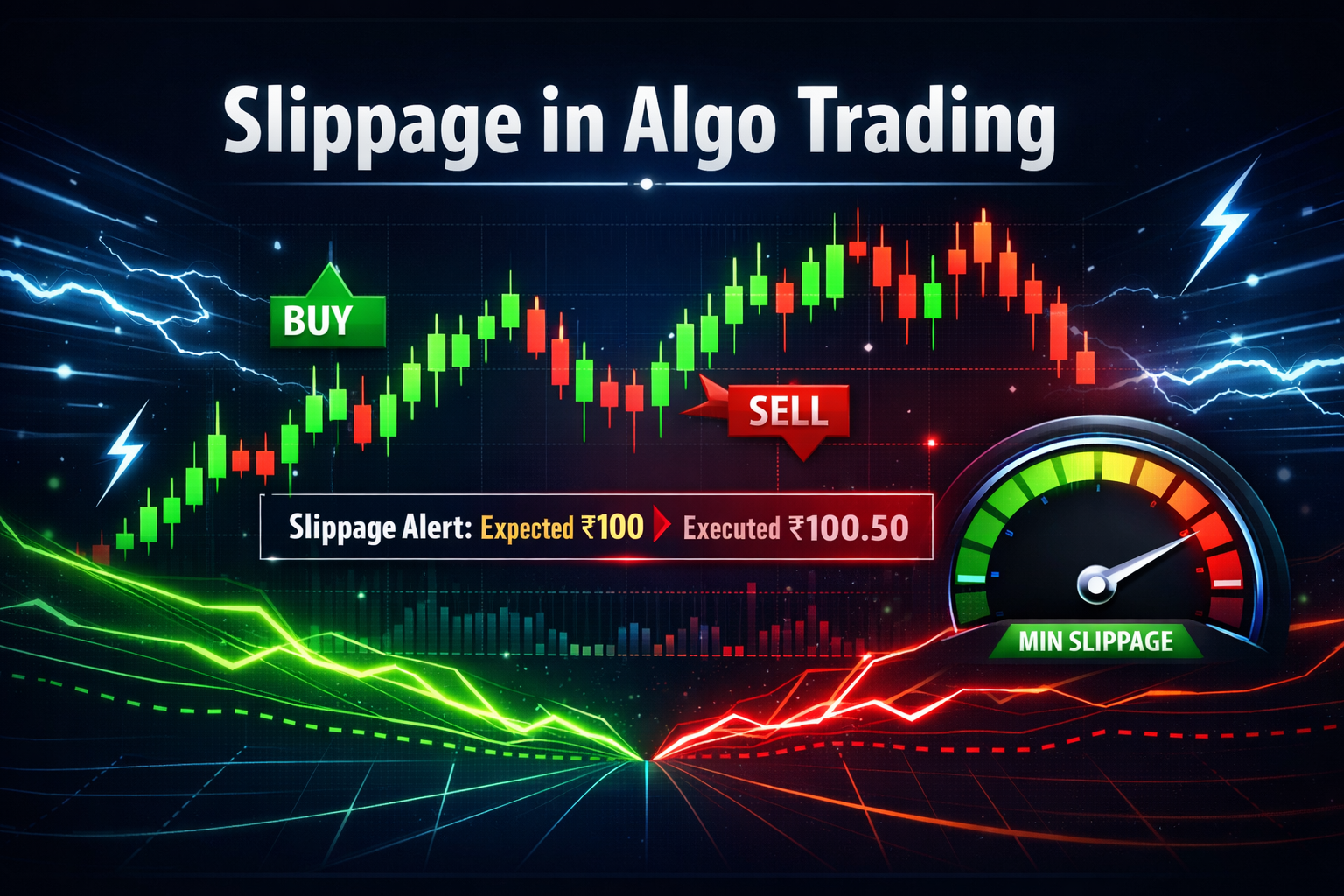
Slippage occurs when there's a difference between the expected price of a trade and the actual executed price in algorithmic trading. This commonly happens due to market volatility, low liquidity, or delays in order execution.
Causes of Slippage
Several factors contribute to slippage in algo trading. High market volatility causes rapid price swings, making it hard to match the quoted price. Large order sizes can move the market against you, while latency from slow platforms or networks worsens the gap. Low liquidity in assets also amplifies the issue, as fewer buyers or sellers lead to bigger price deviations.
Impact on Trading Performance
Slippage directly cuts into profits, especially in high-frequency strategies like scalping or arbitrage. Even small differences per trade add up over thousands of executions, eroding backtested returns. In volatile markets like forex or crypto, it can turn winning algos into losers without proper mitigation.
Ways to Minimize Slippage
Use low-latency platforms with direct market access and colocated servers near exchanges for sub-millisecond execution. Smart order routing picks the best liquidity venues, while limit orders avoid market orders during volatility. Automated algos with real-time data feeds react faster than manual trading, reducing delays.
| Strategy | How It Reduces Slippage | Best For |
|---|---|---|
| Low-Latency Engines | Sub-ms execution via DMA | HFT, scalping |
| Limit Orders | Caps execution price | Volatile sessions |
| Smaller Orders | Avoids market impact | Illiquid assets |
| Peak Hours Trading | Higher liquidity | Equities, forex |
Low-Slippage Algo Platform Recommendation
For nearly zero slippage, check out Rattle their platform leverages advanced low-latency tech for precise executions. It's ideal for Indian traders handling equities, derivatives, and more with minimal price deviations.